
Projects
Creating the Perfect Engraved Charcuterie Board
Jan
Estimated reading time: 9 minutes
Key Takeaways
- Choosing the Right Wood: Select closed-grain hardwoods like Maple, Cherry, or Walnut for durability, food safety, and the best engraving results. Each wood offers a unique color and grain to match your desired aesthetic.
- Digital Design is Key: Use high-quality vector (SVG, AI) or raster (PNG, JPG) files for your design to ensure the laser engraver can create crisp, clean, and professional-looking results.
- Preparation and Calibration: A perfect engraving requires a clean, smooth surface and a test run on a scrap piece of wood to dial in the correct power and speed settings for your specific material.
- Food-Safe Finishing is Non-Negotiable: Always finish your board with a food-safe product, such as food-grade mineral oil or a beeswax blend, to protect the wood and make it safe for serving.
Table of Contents
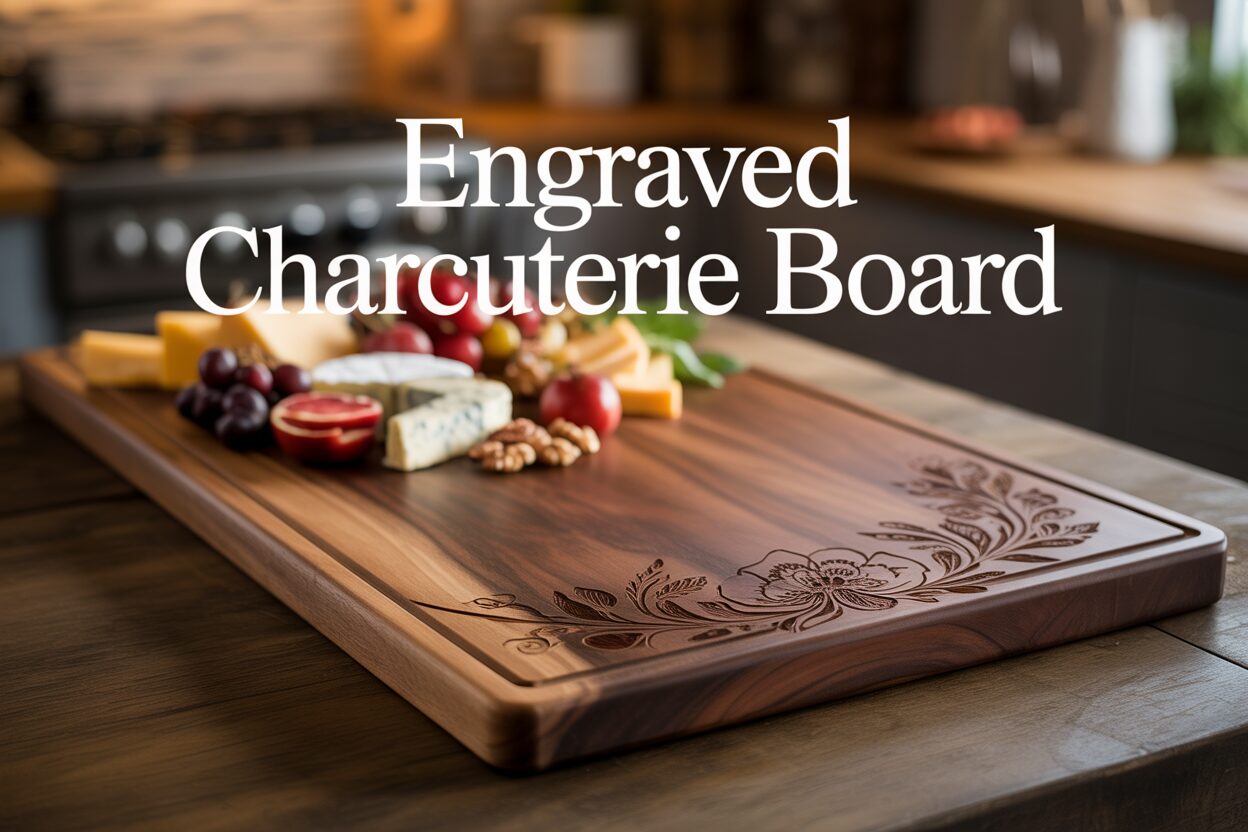
Discover how a simple wooden board can be transformed into a stunning centerpiece for any gathering. An engraved charcuterie board is more than just a serving platter; it’s a personalized work of art. This guide will walk you through the entire process, from choosing the right materials and design to the final touches, ensuring you create a beautiful and functional piece.
Interested in more Charcuterie Board? Check out our Charcuterie Board laser file designs: Click here!
The Art of the Personalized Charcuterie Board
In a world of mass-produced goods, there is a growing desire for items that tell a story, that hold meaning beyond their function. The humble charcuterie board, a staple of social gatherings and cozy nights in, is the perfect canvas for this transformation. Moving beyond a simple platter for meats and cheeses, a personalized charcuterie board becomes a unique expression of identity, love, and memory. It ceases to be just another kitchen utensil and evolves into a piece of functional art, a centerpiece that reflects the personality of its owner. This shift from a generic serving piece to a bespoke treasure is where the true art lies, turning a beautiful piece of wood into a vessel for personal narrative and a testament to the moments that define us.
While there are many ways to customize a board, nothing matches the elegance and permanence of engraving. Unlike painted designs that can chip or vinyl decals that can peel, an engraving is carved directly into the wood grain, becoming an inseparable part of the board itself. An engraved charcuterie board carries a sense of craftsmanship and intentionality. The process physically alters the surface, creating a tactile and visual depth that is both subtle and striking. Whether it’s a crisp, laser-etched family name or a delicately routed floral pattern, the engraving adds a layer of sophistication that elevates the entire piece. This permanence ensures that the sentiment is not fleeting; it is designed to last a lifetime, aging gracefully along with the wood and the memories it helps create.
From Serving Platter to Cherished Keepsake
The true magic of a personalized board lies in its power to capture and commemorate life’s most significant milestones. It transforms from a simple serving platter into a cherished keepsake, a tangible reminder of a special day, a beloved person, or a treasured place. The specific personalization is what imbues the board with its unique soul, making it an incredibly thoughtful gift for any occasion. Consider the possibilities:
- Weddings and Anniversaries: Engraving a board with the couple’s names, the date they were married, and perhaps the coordinates of their wedding venue creates a gift that is both practical for their new life together and deeply symbolic of their union. It becomes the go-to platter for every anniversary celebration to come.
- Housewarmings: What better way to celebrate a new home than with a board featuring the family’s name and the year they were established? It can be engraved with their new address or a simple, welcoming phrase like “Home Sweet Home,” instantly making a new house feel like a home.
- Holidays and Family Tributes: Imagine a board engraved with a cherished family recipe in a grandparent’s actual handwriting. This kind of deep personalization connects generations, turning the act of serving food into an act of remembrance and tradition.
Each time the board is brought out for a gathering, it serves not only food but also stories, sparking conversations and recalling the happy memories etched into its surface.
This is why the journey of creating your own engraved charcuterie board is so rewarding. The act of designing and crafting it yourself adds an unparalleled layer of thoughtfulness, whether you are making it for your own home or as a gift for someone special. You are not just buying an object; you are investing your time and creativity into making a future heirloom. The process of selecting the perfect wood, painstakingly laying out the design, and watching it come to life under the engraver is a deeply satisfying experience. This guide will walk you through every step of that process, empowering you to create a piece that is not only beautiful and functional but is also rich with personal meaning.
Selecting the Perfect Wood and Design
The foundation of any stunning engraved charcuterie board is, quite literally, the wood itself. The choice of material is not merely an aesthetic one; it directly impacts the board’s durability, its food safety, and how well it accepts the engraving. For a custom cutting board that will be both used and displayed, hardwoods with a closed, tight grain are the superior choice. These woods are less porous, making them more resistant to bacteria and easier to clean. They also provide a smooth, consistent surface that is ideal for detailed laser work. Among the many options available, three stand out as the top contenders for their beauty and performance:
- Maple: Often considered the workhorse of cutting boards, hard maple is an excellent choice. Its light, creamy color creates a high-contrast canvas, making dark laser engravings pop with striking clarity. Maple is incredibly durable and dense, resisting knife marks and wear over time. Its subtle grain pattern won’t compete with intricate designs, making it perfect for detailed logos, fine text, or complex imagery.
- Cherry: For a warmer, richer tone, cherry is an unparalleled option. It boasts a beautiful reddish-brown hue that deepens to a luxurious patina with age and exposure to light. The wood is smooth to the touch and engraves beautifully, producing a clean, dark burn that complements its warm coloring. While slightly softer than maple, its elegance and evolving character make it a favorite for sentimental gifts like wedding or anniversary boards.
- Walnut: Representing the peak of luxury, walnut provides a deep, dark, and dramatic look. Its rich chocolate-brown tones are often streaked with lighter highlights, adding incredible visual interest. An engraving on walnut is more subtle and sophisticated, creating a tone-on-tone effect rather than a stark contrast. This makes it ideal for bold, simple designs like monograms or family names, where the carving adds texture and shadow for a refined, high-end finish.
Harmonizing Design with Wood and Shape
Once you have selected your wood, the next step is to choose a design that harmonizes with your canvas. The goal is to create a cohesive piece where the wood, the shape of the board, and the engraving work together, rather than competing for attention. Consider the wood’s grain: a piece of maple with a highly figured or “curly” grain is a piece of art in itself and might be best complemented by a simple, elegant monogram tucked into a corner. Conversely, a straight, even-grained piece of cherry can handle a more complex, centrally located design without looking too busy. The shape of the board is equally important. A long, rectangular “paddle” board is perfectly suited for a line of text, like a family name and established date, running along the handle or bottom edge. A round board is a natural fit for circular designs, such as a floral wreath encircling a couple’s initials. For boards with a rustic “live edge,” consider an organic design that flows with the natural, uncut curve of the wood, enhancing its raw beauty.
The creative process for wood laser engraving has been revolutionized by the accessibility of digital design files. You no longer need to be a skilled artist to achieve a flawless, professional-looking result. Vector files (like SVG, AI, or DXF) are ideal, as they are infinitely scalable without losing quality, ensuring crisp lines at any size. High-resolution raster images (like PNG or JPG) also work well, especially for photorealistic engravings. Websites like Etsy are treasure troves of pre-made, customizable designs, from intricate kitchen conversion charts to elegant split-letter monograms. Alternatively, user-friendly software allows you to create your own text-based designs or simple graphics with ease. By using a digital file, you provide the laser engraver with a precise map, translating your vision onto the wood with a level of detail and perfection that would be impossible to replicate by hand. This digital precision is the key to transforming a great idea into a breathtaking finished product.
The Laser Engraving Process Step-by-Step
With your wood selected and your design finalized, it is time to bring your vision to life. The wood laser engraving process is a fascinating blend of digital precision and natural materials, but achieving a perfect result requires careful preparation and methodical execution. Rushing this stage can lead to misaligned designs or a poor-quality burn, so take your time to get every detail right before you press the start button. The first step is to prepare the wood surface. Even if your board looks clean, it’s essential to ensure it is pristine for the laser. Lightly sand the entire surface with a fine-grit sandpaper (220-grit is ideal) to create a perfectly smooth canvas. Afterwards, thoroughly clean it to remove all dust and natural oils. A wipe-down with a lint-free cloth and denatured alcohol is highly effective, as the alcohol will evaporate completely without leaving any residue that could interfere with the engraving. For an exceptionally clean engraving, especially on light-colored woods like maple, consider applying a layer of wide, low-tack masking tape over the area you plan to engrave. The laser will cut through the tape, and this simple trick will prevent smoke and resin from staining the surrounding wood grain, resulting in a crisper final look.
Calibrating for the Perfect Burn
Before you engrave your final piece, performing a test run is the single most important step to guarantee success. Different wood species, and even different boards of the same species, react uniquely to the laser due to variations in density and resin content. This test is where you will dial in the two most critical settings in your laser software: power and speed. Power dictates the intensity of the laser beam, while speed controls how quickly the laser head moves across the wood. A higher power or slower speed results in a deeper, darker burn, while lower power or faster speed creates a lighter mark. Your goal is to find the sweet spot that produces a rich, dark color without creating an overly deep or charred trench. Use a scrap piece of the exact same wood as your charcuterie board. If you don’t have a scrap, you can use the back of the board in an inconspicuous area. Create a small test grid or a series of small shapes in your software and assign different power and speed settings to each one. Running this test file will give you a clear visual comparison, allowing you to choose the combination that best matches your desired aesthetic.
Once your settings are dialed in, it’s time to engrave the final laser engraved cutting board. Securely position the board on the laser bed, ensuring it is perfectly level and cannot shift during the process. Import your final design file into the software and carefully place it on the digital representation of your board. Use the machine’s framing or tracing function to project a low-power red dot that outlines the engraving area, allowing you to double-check that the placement is exactly where you want it. The next critical step is setting the focal height of the laser. This ensures the laser beam is perfectly focused on the wood’s surface, which is essential for achieving sharp, clean lines rather than fuzzy, blurry ones. With your preparations complete, double-check your power and speed settings, turn on your ventilation system, and start the engraving job. Never leave a laser cutter unattended while it is operating. As the laser begins to work, you will see your digital design permanently etched into the wood, turning a simple board into a personalized work of art.
Applying a Food-Safe Finish and Long-Term Care
The laser has cooled and your design is now a permanent part of the wood, but the most critical step for ensuring both the beauty and safety of your project is yet to come. Finishing an engraved charcuterie board is not merely about making it look good; it is an absolute necessity to protect the wood from moisture, prevent it from drying out and cracking, and create a surface that is safe for direct contact with food. The raw, open pores of the newly engraved wood are particularly vulnerable. Applying a food safe wood finish creates a protective barrier that seals these pores, deepens the natural color and grain of the wood, and makes the engraved details stand out with rich contrast. It is crucial to select a finish that is non-toxic and specifically designed for culinary items, as common workshop finishes like polyurethane or lacquer can leach harmful chemicals into food.
When selecting your finish, simplicity and purity are key. You want a product that nourishes the wood without any risk of contamination. The two most trusted and widely used options are:
- Food-Grade Mineral Oil: This is the go-to standard for cutting boards and butcher blocks for a reason. It is an inert, non-drying oil that penetrates deep into the wood fibers, hydrating them and preventing them from becoming brittle. Because it never fully cures or hardens, it remains flexible within the wood, providing lasting protection against water absorption. Be sure to purchase food-grade mineral oil, which is colorless, odorless, and tasteless.
- Beeswax and Mineral Oil Blends: Often sold as “board butter” or “wood conditioner,” these products offer a superior level of protection. The mineral oil provides the deep conditioning, while the beeswax creates a water-repellent seal on the surface. This waxy barrier helps to fill in the microscopic pores of the wood more effectively than oil alone, giving the board a silky-smooth feel and a beautiful, low-gloss sheen. You can purchase these pre-made or easily make your own by melting one part beeswax with four parts mineral oil.
It is vital to avoid using common cooking oils like olive, vegetable, or canola oil. These are organic oils that will eventually go rancid, creating a sticky surface and an unpleasant odor that is impossible to remove.
The Finishing and Care Regimen
Applying the finish is a simple but satisfying process. First, ensure your board is completely free of any dust or residue from the engraving process. A soft brush can be used to gently clean out the engraved lines, followed by a wipe with a clean, dry, lint-free cloth. Now, you are ready to apply the finish:
- Liberally pour the mineral oil or apply a generous scoop of board butter onto the surface of the board. Don’t be shy; the wood is thirsty.
- Using a clean cloth, work the finish into the wood in a circular motion. Cover every surface—the top, the bottom, and all the sides and edges. Pay special attention to the engraved areas, making sure the finish fully penetrates the exposed wood.
- Let the board sit and absorb the finish. For the first coat, this is the most important step. Allow at least four hours, but for the best possible result, leave it to soak overnight. You will see the wood drink up the oil.
- After the board has absorbed all it can, use another clean cloth to thoroughly buff off any excess from the surface. The board should feel hydrated and smooth, not greasy or sticky.
To ensure your engraved charcuterie board remains a beautiful and safe centerpiece for years, proper long-term care is essential. Never submerge it in water or put it in a dishwasher, as this will cause it to warp and crack. After each use, wash it by hand with a little mild soap and warm water, then immediately towel dry it and allow it to air dry completely while standing on its edge. When you notice the wood starting to look pale or dry, simply repeat the finishing process to re-hydrate and re-seal it. A quick re-oiling every month or so will maintain its protective barrier and keep it looking as stunning as the day you made it.
Conclusions
You now have the knowledge to create a beautiful engraved charcuterie board that is both personal and practical. By selecting the right wood, using a compelling design, and applying a food safe wood finish, you can craft a memorable gift or a stunning addition to your own home. Don’t hesitate to experiment with different designs to create your unique masterpiece.
Frequently Asked Questions (FAQ)
Q: What is the best wood for an engraved charcuterie board?
A: The best woods are dense, closed-grain hardwoods like Maple, Cherry, or Walnut. They are durable, more resistant to bacteria, and provide a smooth, consistent surface that is ideal for detailed laser engraving.
Q: Can I use cooking oil like olive oil to finish my board?
A: No. You should never use common cooking oils like olive, vegetable, or canola oil. These oils will eventually go rancid, creating a sticky surface and an unpleasant odor that is impossible to remove from the wood.
Q: How do I clean my engraved charcuterie board?
A: Clean your board by hand with mild soap and warm water. Never submerge it or put it in a dishwasher. After washing, immediately towel dry it and let it air dry completely while standing on its edge to prevent warping.
Q: Is laser engraving food-safe?
A: Yes, the engraving process itself is safe. The laser simply burns away the wood. The critical step to ensure food safety is sealing the entire board, including the engraved area, with a non-toxic, food-grade finish like mineral oil.
Block "subscribe-popup" not found
